
Blocked Drain Keeps Coming Back? Why Jetting May Not Fix the Real Problem
If your blocked drain keeps returning after jetting, there may be a deeper fault. Learn the common causes and when to book a CCTV drain survey in Yorkshire.
A blocked drain is annoying. A blocked drain that keeps coming back is a warning sign.
If the same drain has been cleared more than once, there's a good chance the blockage is only the symptom. Jetting may clear the waste, water, wipes, fat or debris sitting in the pipe — but it won't fix a broken pipe, root ingress, poor fall, collapsed section or displaced joint.
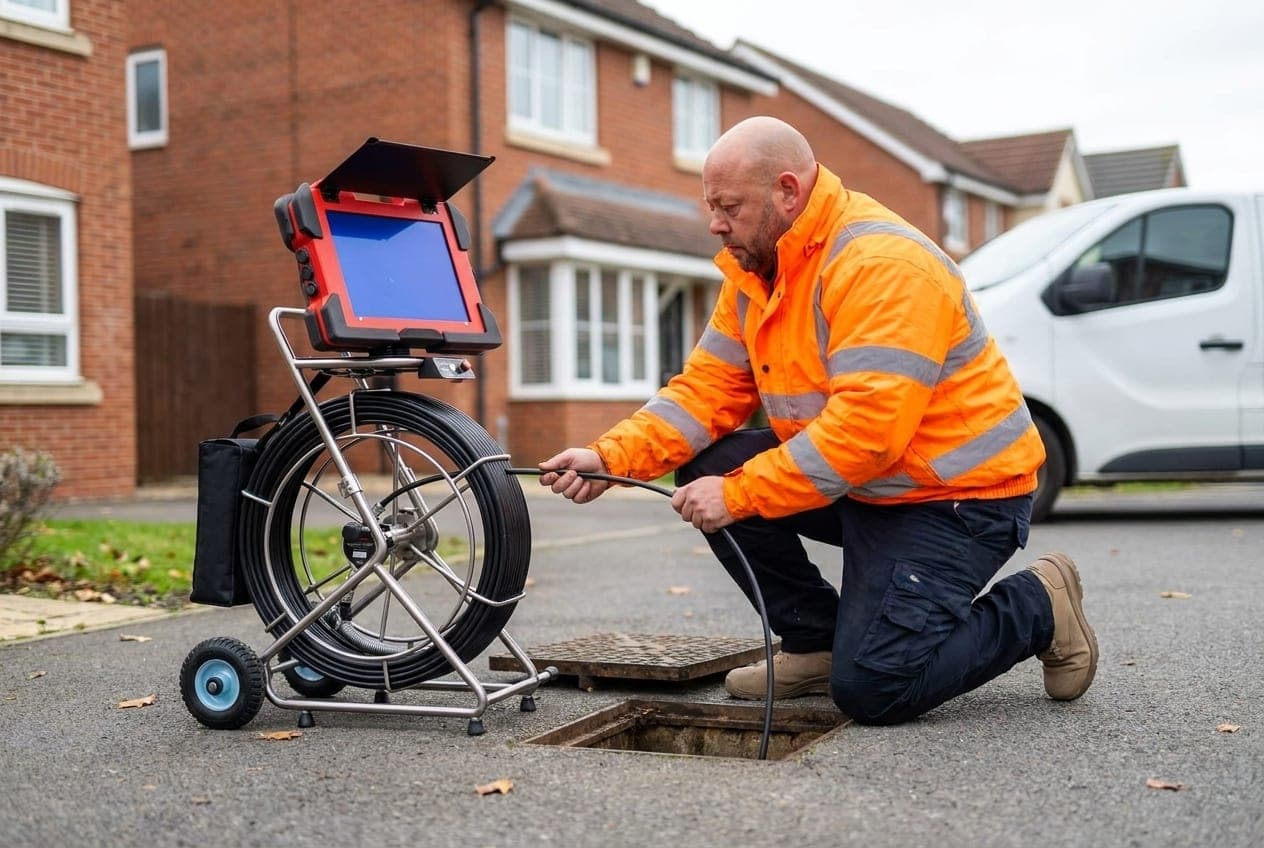
That's why repeat blocked drains need proper investigation. In many cases, a CCTV drain survey is the difference between paying for another temporary clearance and actually finding the cause.
Why does the same drain keep blocking?
A drain shouldn't keep blocking without a reason. Once a normal blockage is cleared, the pipe should flow properly. If the issue returns, something is likely catching waste, slowing the flow or letting material build up again.
Common causes include:
- Tree roots growing into the pipe
- A cracked or collapsed drain
- Displaced joints in older clay pipework
- A belly in the pipe where water sits
- Poor fall or backfall
- Scale, fat or silt build-up
- Wet wipes or sanitary products catching on a defect
- A shared drain surcharge
- A damaged gully or inspection chamber
- Misconnected or badly altered pipework
Until the cause is identified, the problem can keep returning. Our guide to the common causes of blocked drains in Yorkshire goes deeper on each.
Why jetting sometimes only gives temporary relief
Drain jetting is highly effective when the problem is a straightforward blockage. High-pressure water clears fat, silt, wipes, leaves, sludge and general debris.
But jetting cannot repair the pipe itself.
If there is a structural fault, the blockage may return within weeks, days or even hours. Waste keeps catching on the damaged section and the drain blocks again. This is especially common in older Yorkshire properties with clay drains, mature trees nearby or pipework that has shifted over time.
A good engineer will often recommend a CCTV survey after clearance if the blockage looks unusual, severe or repeated. For the difference between the two, see drain jetting vs a drain survey.
Signs your blocked drain needs a CCTV survey
Consider a CCTV drain survey if:
- The same drain has blocked more than once
- The blockage returned quickly after jetting
- You can hear gurgling from toilets, sinks or gullies
- Wastewater drains slowly across the property
- You notice sewage smells outside or inside
- External gullies overflow during normal use
- A manhole fills up repeatedly
- There are trees close to the drainage run
- You are buying a property with signs of drainage problems
- The engineer has found roots, silt, clay fragments or recurring debris
The more often the problem returns, the more important the survey becomes.
Tree roots are a common cause in Yorkshire
Tree roots are one of the most common reasons for repeat drainage problems. Roots are drawn to moisture and can enter through tiny cracks, open joints or displaced pipe sections.
Once inside, they form a net that catches tissue, wipes, fat and other waste. Jetting can cut roots back temporarily, but if the entry point remains, the roots return.
A CCTV survey shows exactly where roots are entering and how severe the damage is. Depending on the pipe's condition, the solution may be root cutting, patch lining, relining or excavation. Our guide to tree roots in drains explains the options.
Collapsed or cracked drains
Older clay drains can crack, fracture or collapse — particularly where there's been ground movement, heavy vehicle loading, poor installation, root pressure or long-term deterioration.
A collapsed drain causes repeated blockages because the pipe no longer lets waste flow freely. In severe cases, the camera may not pass through the damaged section.
A CCTV survey locates the problem accurately, so any repair can be targeted. Without it, excavation becomes guesswork. Read more about collapsed drains in Yorkshire.
Bellied pipework and poor fall
Sometimes the pipe isn't broken — it just isn't laid correctly. If a section has dipped, waste and water sit in the low point instead of flowing away. This is often called a belly in the pipe.
The result is a drain that clears temporarily but blocks again because solids settle in the same place. Poor fall or backfall creates similar issues: water doesn't carry waste away properly, so the pipe keeps silting up.
A CCTV survey reveals standing water, sediment and the section where flow is failing.
Shared drains can confuse the issue
In many Yorkshire terraces, semis and older properties, drains may be shared with neighbouring homes. If a shared drain blocks downstream, your property may show symptoms even if you did nothing wrong.
That can make responsibility hard to understand. A CCTV survey helps identify whether the issue sits within your private drain, a shared run, or a section that may need to be referred to Yorkshire Water — which matters because responsibility affects who arranges and pays for the work.
Should you survey before or after unblocking?
If the drain is actively blocked, it usually needs clearing first — a camera needs enough access and visibility to inspect the pipe properly.
The usual process is:
- Clear the blockage if the pipe is full or inaccessible.
- Flush the line so the camera can see the pipe condition.
- Carry out the CCTV inspection.
- Identify the cause and location.
- Recommend repair, maintenance or further action.
This avoids paying for repeated clearance without understanding why the blockage happened.
What does the survey show?
A CCTV drain survey can identify:
- Root ingress
- Fractures and cracks
- Displaced joints
- Collapsed sections
- Scale build-up
- Silt and debris
- Poor fall
- Standing water
- Misconnections
- Damaged chambers
- Pipe material and layout
You receive a clear explanation of what has been found, what it means, and what the next step should be.
How to prevent repeat blocked drains
You can't prevent every issue, especially if the pipe is already damaged. But you can reduce the risk by keeping the most common culprits out of your drains.
Never put the following into drains:
- Fat, oil or grease
- Wet wipes, even if labelled flushable
- Sanitary products
- Cotton buds
- Nappies
- Food waste
- Paint, plaster or building waste
- Excess soil or garden debris
If the pipe is structurally sound, good habits make a big difference. If the pipe is damaged, though, prevention alone won't solve it.
Frequently Asked Questions
Why does my drain unblock and then block again so quickly?
A rapid return almost always means a structural fault — a crack, collapse, displaced joint or sag — is catching waste. Jetting clears the debris but leaves the underlying fault, so it builds up again.
Do I need a survey if jetting fixed it this time?
If it's the first blockage and the drain now flows freely, you may not. If it's happened more than once, a CCTV survey is worth it to find out why before you pay for another clearance.
Can a blocked drain be the neighbour's responsibility?
Possibly. On shared drains, a downstream blockage can affect your property. A survey helps show where the blockage sits and whether it may be a shared or public-sewer responsibility.
Book a CCTV survey for a repeat blocked drain in Yorkshire
If your blocked drain keeps coming back, don't keep paying for temporary fixes. Yorkshire Drain Survey can inspect the pipe, identify the cause and give you clear recommendations for the next step. We cover Leeds, Bradford, Wakefield, Sheffield, York, Harrogate, Hull, Beverley and surrounding areas.
Call 0113 734 2245 for a quote, or fill in our contact form and we'll get back to you the same day.
Related guides
How to Prevent Blocked Drains in Yorkshire
Practical tips to prevent blocked drains in Yorkshire homes — what causes blockages, the early warning signs, and how regular maintenance keeps drains flowing.
Read guide →Blocked Drains in Yorkshire: Causes, Costs, and How to Clear Them
Blocked drains in Yorkshire? Understand the common causes — fat, roots, collapsed clay pipe — what it actually costs to clear them, who's responsible, and how a CCTV survey stops the problem coming back. Local guide for LS/BD/S/HU postcodes.
Read guide →Common Causes of Blocked Drains in Yorkshire (And How to Spot Them Early)
Discover the most common causes of blocked drains in Yorkshire, from wet wipes to tree roots, and how a CCTV drain survey catches problems before they escalate.
Read guide →Get in touch
Need a CCTV drain survey in Yorkshire?
Same-day available. Full written report. Transparent pricing. Call us or fill in the form.