
Tree Roots in Drains: What Yorkshire Homeowners Need to Know
Tree roots in drains are one of the leading causes of drain failure in Yorkshire. Learn the signs, costs, and how a CCTV survey protects your home.
Tree roots in drains are one of the most common — and most destructive — drainage problems facing Yorkshire homeowners. Across cities like Leeds, Bradford, and Sheffield, older properties sit alongside mature street trees and established garden planting. When roots and ageing clay pipes come together, the result is often slow drains, recurring blockages, or structural collapse.
Understanding how root intrusion works, what it costs to put right, and how to spot it early can save you thousands.
How Do Tree Roots Get Into Drains?
Tree roots enter drains through existing weaknesses — hairline cracks, degraded pipe joints, or deteriorated mortar. Older clay and pitch fibre pipes, which are extremely common beneath Victorian and Edwardian housing stock across West Yorkshire, are particularly vulnerable because their joints are not sealed and flex over time. Once roots find moisture inside a pipe, they grow towards it. Fine feeder roots push through gaps as small as a millimetre; over months and years they thicken, branch, and eventually cause a partial or complete blockage.
Tree species with aggressive root systems — willows, poplars, silver birch, and some varieties of oak — can extend their roots up to two to three times the height of the tree. A willow 8 metres tall can send roots 20 metres or more in search of water. Many Yorkshire terrace streets have mature trees planted close to the pavement, with drains running directly beneath.
What Are the Signs of Root Intrusion in Your Drains?
Root intrusion doesn't always produce dramatic, immediate symptoms. More often it's a slow build-up. Common warning signs include:
- Slow-draining sinks and baths that gradually worsen despite rodding or chemical treatments
- Recurring blockages — roots keep coming back even after jetting, because the root mass remains in the pipe
- Gurgling sounds from toilets or plug holes when other appliances drain
- Damp or subsidence near drain runs, particularly in soft garden soil
- Sinkholes or depressions in lawns or paths above a drain line
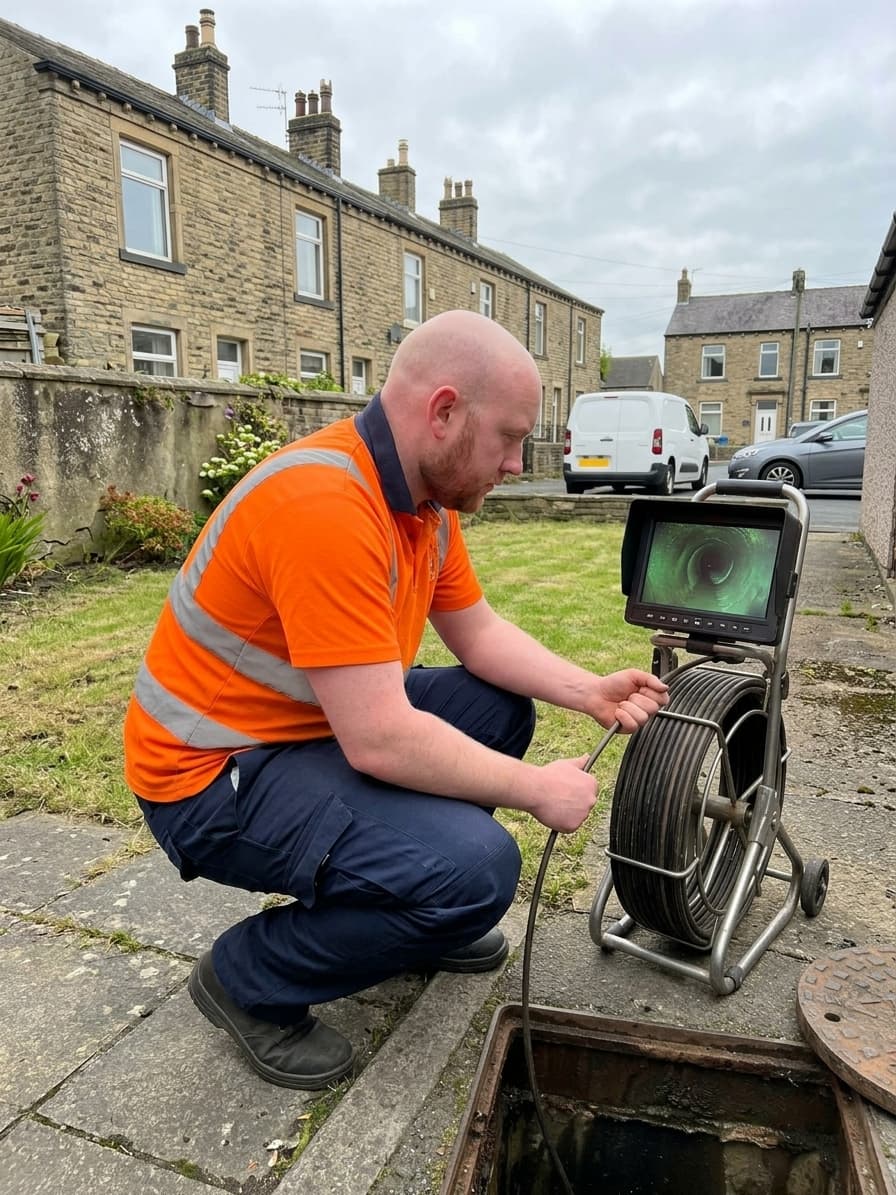
If you're experiencing any of these, a CCTV drain survey is the only way to confirm root intrusion and assess how far the damage has progressed.
What Are the Repair Options for Root Damage?
Root removal alone — high-pressure jetting combined with a rotary cutter to clear the pipe — is the lowest-cost option, but it's only a temporary fix if the root entry point is not repaired.
Where roots have caused cracking or joint failure, you're looking at structural repair. Options depend on the extent of damage:
- Patch lining — a short section repair, suitable for localised damage
- Full drain relining — a no-dig technique that inserts a new pipe inside the old one along the full run
- Excavation and pipe replacement — at the upper end of the cost range, used where access is difficult or relining isn't viable
In Yorkshire, where many properties are terrace houses with back-to-back drainage runs and limited access, no-dig relining is frequently the most cost-effective option. Yorkshire Water took over responsibility for shared private sewers in 2011 under the Sewer Transfer, so if root damage affects a shared sewer lateral — not just your private drain — the utility may carry some responsibility. It's worth checking before you pay for repairs.
Which Trees Cause the Most Drain Damage?
Not all trees are equal when it comes to drain risk. The most commonly implicated species in UK drainage investigations are:
- Willow — extremely aggressive root systems; avoid planting near drains
- Poplar and aspen — fast-growing with wide-spreading roots
- Silver birch — common in Yorkshire gardens; opportunistic in pipe joints
- Fig — compact above ground but highly invasive root system
Oak, beech, and most fruit trees are lower risk, though no tree planted directly above a drain run should be considered safe if pipes are old or already compromised.
Does a Homebuyer Survey Check for Root Intrusion?
No — a standard RICS Level 2 or Level 3 homebuyer survey does not include a drain inspection. Surveyors typically note drain locations and recommend a specialist drainage survey where concerns arise, but they cannot see inside the pipes.
A homebuyer drain survey is strongly recommended when buying any property with mature trees near the building line, or any pre-1970 property with clay drainage. In areas like Harrogate, York, and Wakefield — where Victorian housing with mature garden planting is common — root intrusion is regularly found during pre-purchase surveys.
Can Root Damage Be Prevented?
Once a tree is established, prevention is largely about managing the drainage system:
- Annual or biennial CCTV inspection on older pipe runs beneath trees — catches root ingress early when a simple jet clear suffices
- Root barriers installed during any excavation work near an established tree
- Choosing tree species carefully before new planting — take advice from a tree surgeon on root radius
- Maintaining pipe integrity — cracked or poorly jointed pipes are the entry point
If you're buying a property, commission a CCTV drain survey before exchange. The cost is trivial compared to discovering a collapsed drain run after you've moved in.
Get Expert Advice From Yorkshire Drain Survey
We carry out root intrusion surveys, high-pressure jetting, and no-dig relining across the whole of Yorkshire — from Leeds and Bradford to Huddersfield, Halifax, and beyond. Our engineers use the latest push-rod and crawler cameras to give you a clear picture of what's happening inside your pipes.
To book a survey or get a no-obligation quote, call 0113 734 2245 or fill in our contact form.
Related guides
How to Prevent Blocked Drains in Yorkshire
Practical tips to prevent blocked drains in Yorkshire homes — what causes blockages, the early warning signs, and how regular maintenance keeps drains flowing.
Read guide →Blocked Drains in Yorkshire: Causes, Costs, and How to Clear Them
Blocked drains in Yorkshire? Understand the common causes — fat, roots, collapsed clay pipe — what it actually costs to clear them, who's responsible, and how a CCTV survey stops the problem coming back. Local guide for LS/BD/S/HU postcodes.
Read guide →Smelly Drains in Yorkshire? Causes, Health Risks & How to Fix Them
Smelly drains in Yorkshire homes are more than a nuisance. Learn what causes drain smells, when they're dangerous, and how a CCTV survey finds the source.
Read guide →Get in touch
Need a CCTV drain survey in Yorkshire?
Same-day available. Full written report. Transparent pricing. Call us or fill in the form.