
Soakaway Problems in Yorkshire: Signs, Causes & What to Do
Soakaway problems are common in Yorkshire due to clay soils. Learn the signs of a failed soakaway and how a CCTV drain survey can help.
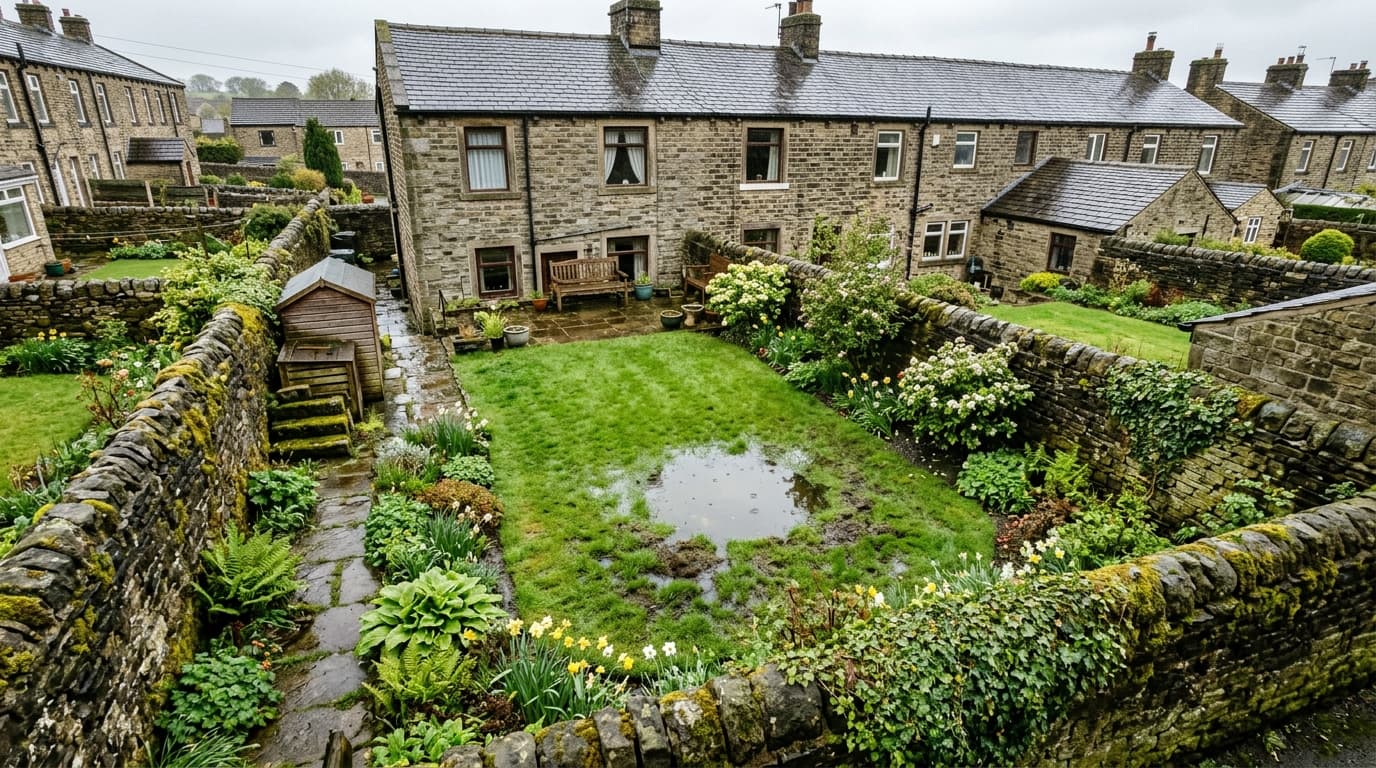
If your garden turns into a swamp every time it rains, there's a good chance your soakaway has failed. Soakaway problems are one of the most common — and most overlooked — drainage issues we deal with across Yorkshire. Many homeowners don't even realise they have a soakaway, let alone that it's stopped working.
At Yorkshire Drain Survey, we regularly investigate failed soakaways as part of our CCTV drain survey service. Here's what you need to know about why they fail, how to spot the signs, and what your options are.
What Is a Soakaway and How Does It Work?
A soakaway is an underground structure — usually a rubble-filled pit, brick chamber, or modern plastic crate system — designed to collect rainwater from your roof, driveway, or patio and allow it to slowly percolate into the surrounding ground. They're the default method of surface water disposal for properties that aren't connected to a public surface water sewer.
Under Building Regulations (Approved Document H), soakaways must be sited at least 5 metres from any building and should not be placed in areas where infiltrating water could affect structural foundations. They also require a percolation test to confirm the soil can actually absorb water at a sufficient rate — a step that was often skipped on older properties.
Why Do Soakaways Fail in Yorkshire?
Yorkshire's geology is a major factor. Much of West and South Yorkshire sits on heavy clay subsoil — particularly around Leeds, Bradford, Wakefield, and Huddersfield. Clay has extremely low permeability, which means water simply cannot drain through it fast enough.
According to the British Geological Survey, clay-rich soils across the Pennine fringe and the Vale of York have infiltration rates well below the threshold needed for effective soakaway performance. In practical terms, a soakaway built in clay soil may fill up during a single heavy downpour and take days to empty — if it empties at all.
Common causes of soakaway failure include:
- Clay or compacted soil — the ground simply won't absorb water fast enough
- Silt and sediment build-up — over time, fine particles clog the rubble or aggregate fill
- Root intrusion — tree roots grow into the chamber and reduce storage capacity
- Age and deterioration — older brick soakaways can collapse or become blocked with debris
- Undersizing — many soakaways installed before modern regulations were too small for the roof area they serve
- Increased hard surfaces — extensions, patios, and driveways add runoff that the original soakaway was never designed to handle
What Are the Signs of a Failed Soakaway?
The most obvious sign of a failed soakaway is persistent waterlogging in your garden after rain. But there are other warning signs to watch for:
- Standing water that takes more than 24 hours to drain away
- Soggy, boggy patches in the lawn — particularly in one area
- Water pooling near foundations or along the side of the house
- Overflowing gutters or downpipes that back up during rain (even when the gutters are clean)
- Damp or water ingress in cellars or ground-floor rooms
- Subsidence or ground settlement around the soakaway location
If you're noticing any of these, it's worth investigating before the problem gets worse. Persistent waterlogging near foundations can contribute to subsidence over time.
How Do You Diagnose a Soakaway Problem?
A CCTV drain survey is the best starting point. Our engineers use specialist iTouch CCTV cameras to inspect the pipework feeding into your soakaway — identifying blockages, root intrusion, collapsed pipes, or disconnected joints that may be preventing water from reaching the soakaway at all.
We can also carry out dye testing and visual inspection of the soakaway chamber itself to assess its condition and capacity. The survey report gives you a clear picture of what's wrong and what needs to happen next — whether that's clearing the existing soakaway, replacing it, or connecting to an alternative drainage solution.
Can a Failed Soakaway Be Repaired?
It depends on the cause. If the soakaway is structurally sound but silted up, it can sometimes be cleaned out and restored. If roots are the problem, clearing and relining the feed pipes may be enough. But in many Yorkshire properties — especially those on heavy clay — the soakaway was never going to work long-term, and the real solution is connecting the surface water to a public sewer (with the relevant Yorkshire Water permissions) or installing a modern attenuation system.
Whatever the situation, diagnosis comes first. Guessing leads to wasted money. A proper survey tells you exactly what you're dealing with so you can make an informed decision.
Do You Need Building Regulations Approval?
If you're replacing or installing a new soakaway, you'll generally need to comply with Building Regulations Approved Document H. This requires a percolation test (also called a soakaway test or BRE 365 test) to confirm the ground conditions are suitable. Your local building control department — whether that's Leeds, Bradford, Kirklees, or Wakefield council — will want to see evidence that the proposed solution will actually work.
If you're planning a home extension or building work, it's worth checking your existing soakaway at the same time. Many extensions increase the roof area draining into a soakaway that was already at capacity.
What Should You Do Next?
If you suspect your soakaway has failed — or you're buying a property and want to know what you're inheriting — a drain survey is the sensible first step. We provide clear upfront pricing before any work begins, and our surveys use best-in-class iTouch CCTV cameras operated by experienced drainage engineers who know Yorkshire's soil conditions inside out.
Don't wait for a waterlogged garden to become a foundation problem. Get the facts first.
📞 Call us on 0113 734 2245 for a quote — we're available Monday to Saturday.
Or fill in our contact form and we'll get back to you the same day.
Related guides
Commercial Drainage Maintenance in Yorkshire: Why Waiting for a Blockage Is the Expensive Option
How commercial drainage maintenance helps Yorkshire businesses prevent blockages, flooding and odours — with CCTV surveys, jetting and planned drain cleaning.
Read guide →Drain Mapping in Yorkshire: What It Is, When You Need It & What the Survey Shows
Need drain mapping in Yorkshire? Learn what a drainage map shows, when you need one for building work, extensions, homebuying or insurance, and how CCTV tracing works.
Read guide →Blocked Drain Keeps Coming Back? Why Jetting May Not Fix the Real Problem
If your blocked drain keeps returning after jetting, there may be a deeper fault. Learn the common causes and when to book a CCTV drain survey in Yorkshire.
Read guide →Get in touch
Need a CCTV drain survey in Yorkshire?
Same-day available. Full written report. Transparent pricing. Call us or fill in the form.