
Can I Get a Drain Survey on a Rental Property? Yorkshire Landlord & Tenant Rights
Can landlords or tenants commission a CCTV drain survey on a rental property in Yorkshire? Here's the legal context, access rights, and best practice.
Can a Landlord Get a Drain Survey on a Tenanted Property?
Yes. Under the Landlord and Tenant Act 1985, landlords retain the right to enter the property to carry out repairs and inspections, and CCTV drain surveys clearly fall within that. Landlords are also legally responsible for the structural condition of drains within the property boundary, so commissioning a survey is part of fulfilling that duty.
The main practical requirements:
- Give the tenant 24 hours' written notice of access (more is best practice)
- Carry out the survey at a reasonable time — typically within normal working hours
- Cause minimal disruption — most surveys take 1–2 hours and don't require entry to the home itself
- Provide a copy of the report if the tenant requests it (good practice, not strictly required by law)
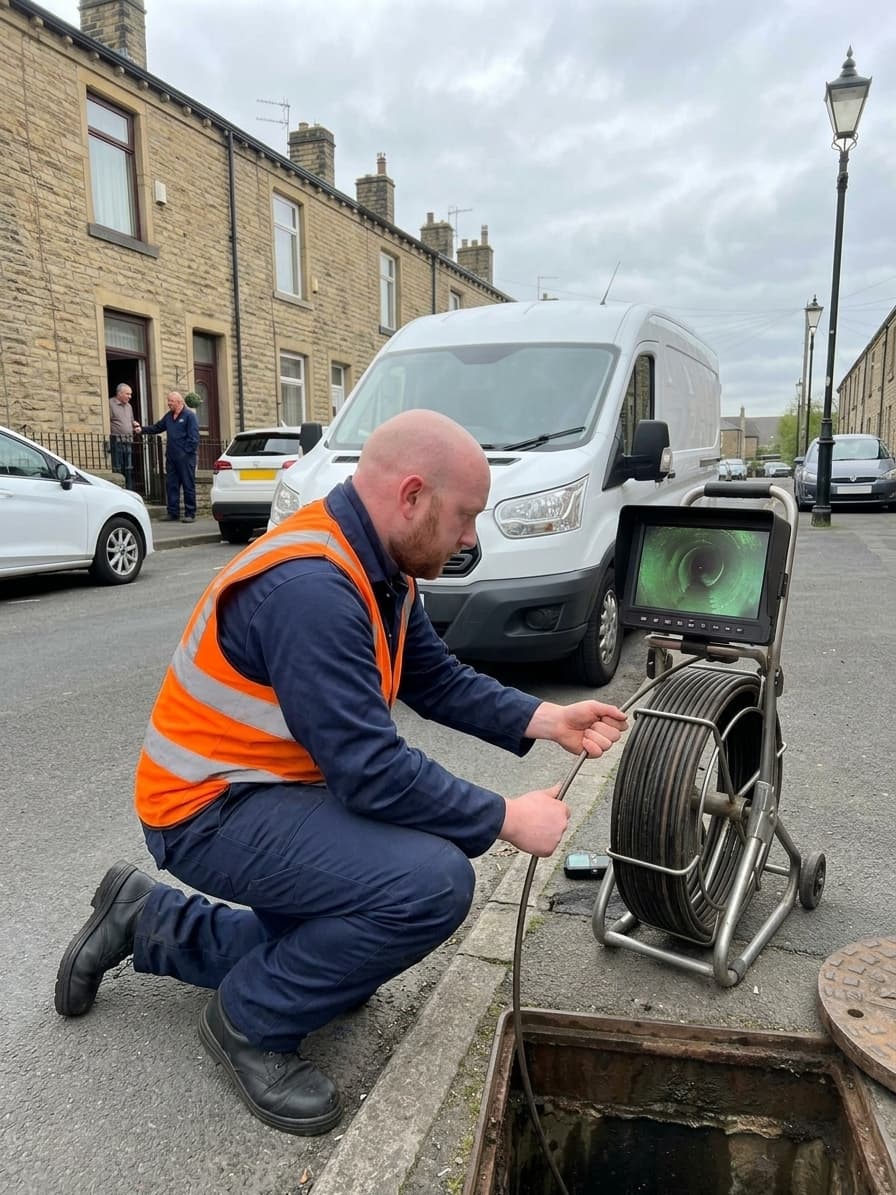
CCTV drain surveys are generally less disruptive than other property checks: the engineer works at inspection chambers outside the property, often without needing to enter the building at all.
Can a Tenant Commission a Drain Survey?
Generally, no — not without the landlord's consent. The tenant doesn't own the property and doesn't have authority to commission works that affect the structure or fittings. Even though a CCTV survey doesn't physically alter anything, it's still a property service that requires the property owner's consent.
That said, tenants do have routes when drainage problems are affecting habitability.
Tenant remedies if drains are failing
If a drainage issue is causing genuine problems — sewage smells, repeated blockages, slow drainage, signs of damp — the tenant should:
- Report it in writing to the landlord or agent, with photographs where helpful
- Allow reasonable time for the landlord to investigate (typically 14–28 days for non-emergency repairs)
- Escalate to the local council if the landlord fails to act — Environmental Health can serve improvement notices for drainage issues affecting habitability
- Document the impact — keep a record of how the issue is affecting daily life, especially for any later disputes
In most cases, the landlord will investigate — and that investigation will often include a CCTV drain survey commissioned by them.
When a tenant might pay for a survey themselves
In rare cases, a tenant may want to commission a survey at their own cost — usually when:
- They're disputing responsibility for a blockage with the landlord
- They want independent evidence of pre-existing condition
- The landlord is refusing to investigate
In these cases, the tenant must still get the landlord's consent for access. Most professional contractors will require landlord authorisation in writing before carrying out the work.
Why Landlords Should Commission Drain Surveys
A pre-tenancy CCTV drain survey is one of the highest-ROI maintenance actions a Yorkshire landlord can take.
Establishes baseline condition
If a tenant later claims a drain was already blocked or damaged when they moved in, the survey is dated, independent evidence to the contrary. Without it, the dispute is your word against theirs.
Identifies issues before they become emergencies
Catching a developing problem during a vacant period and fixing it electively is dramatically cheaper than dealing with it as an emergency call-out at 11pm with a frustrated tenant.
Supports tenancy disputes
Post-tenancy surveys, compared to pre-tenancy footage, can clearly show whether new damage occurred during a tenancy — particularly tenant-caused blockages from wipes, fat, or foreign objects.
Demonstrates good landlord practice
A maintained, surveyed drainage system is part of the duty of care that Environmental Health, courts, and rental tribunals expect from professional landlords. See our drain surveys for Yorkshire landlords guide for more.
How to Carry Out a Survey on a Tenanted Property — Practical Steps
For a smooth process on a tenanted property:
- Give written notice to the tenant — at least 24 hours, ideally a few days. Email is fine.
- Coordinate timing — most tenants prefer surveys when they're at home or when it doesn't disrupt their routine.
- Brief the contractor — give them the tenant's contact details and any specific access points.
- Be reasonable — if the tenant has a genuine reason the proposed time doesn't work, reschedule.
- Share the findings — sending the tenant the relevant findings (and a clear note if any tenant action is required) is good practice.
Most tenants are perfectly happy to facilitate access — drainage problems usually affect them too, so they're often relieved to see the issue investigated.
What If the Tenant Refuses Access?
Refusal of access for a reasonable inspection is a breach of most tenancy agreements. The landlord's options:
- Serve a formal access notice (with appropriate notice period — typically 24 hours)
- Escalate to a Section 21 or Section 8 notice if refusal is persistent and unjustified
- Apply to court for an access order in extreme cases
In practice, refusal is very rare. A polite, well-noticed survey at a reasonable time almost always proceeds without issue. If a tenant has a specific concern (like wanting to be present), accommodate it where possible.
What About HMOs and Multiple-Tenancy Properties?
For HMOs (Houses in Multiple Occupation), the same principles apply — the landlord has the right to commission surveys with appropriate notice. Where multiple tenants share access, notice should be given to all affected tenants.
Drain surveys are particularly valuable for HMOs because:
- More occupants means higher risk of blockages from misuse
- Shared kitchens and bathrooms increase fat and wipe-related issues
- Establishing baseline condition is critical for tenancy disputes
- HMO licensing inspections may reference drainage condition
For commercial tenancies, the lease agreement governs access rights, but most commercial leases explicitly allow landlord inspections.
Frequently Asked Questions
Can a landlord enter the property for a drain survey without notice?
Generally no. Standard tenancy agreements and the Landlord and Tenant Act 1985 require reasonable notice — typically 24 hours minimum. Emergency access (e.g., to address a sewage backup) is the only common exception.
Does a tenant have to pay for a drain survey?
Usually no. Drain surveys for structural maintenance are the landlord's responsibility. A tenant only pays where they've caused damage requiring investigation, and even then only after a clear evidence-based attribution.
Can I commission a drain survey before signing a tenancy?
Not directly — you can't authorise works on a property you don't yet rent. But you can ask the landlord whether one has been done recently and request to see the report. A landlord with a recent clean report is a good sign.
What if the survey finds problems caused by the tenant?
The report can be used as evidence to recover repair costs from the tenant or their deposit, provided the cause is clearly attributable (e.g., wipes blocking the system). For ambiguous causes, a pre-tenancy survey is invaluable for comparison.
How often should landlords commission drain surveys?
At minimum, between tenancies. For HMOs and older properties, every 2–3 years. Properties with prior issues or mature trees nearby benefit from annual checks.
Book a Rental Property Drain Survey in Yorkshire
We work with landlords and letting agents across Yorkshire — Leeds, Bradford, Sheffield, Wakefield, Huddersfield, Harrogate and beyond. We coordinate access with tenants, provide a written report ready for any future tenancy dispute, and offer block-booking discounts for portfolios.
📞 Call us on 0113 734 2245
📋 Or fill in our online form for a fast, no-obligation quote.
Same-day surveys available. MSCC5-coded reports across Yorkshire.
Related guides
CCTV Drain Survey in Beverley & Hull: Why East Riding Homes Need Proper Drainage Checks
Buying, renovating or dealing with drainage problems in Beverley or Hull? Learn why a CCTV drain survey helps protect East Riding homes and businesses.
Read guide →What's the Difference Between a CCTV Drain Survey and a Drain Inspection?
CCTV drain survey vs drain inspection — are they the same thing? Here's the clear distinction, when each is used, and which one you need.
Read guide →How Long Does a Drain Survey Take? Domestic vs Commercial
How long does a CCTV drain survey take? Domestic surveys typically run 1–2 hours, commercial can take a full day. Here's what affects the duration.
Read guide →Get in touch
Need a CCTV drain survey in Yorkshire?
Same-day available. Full written report. Transparent pricing. Call us or fill in the form.