
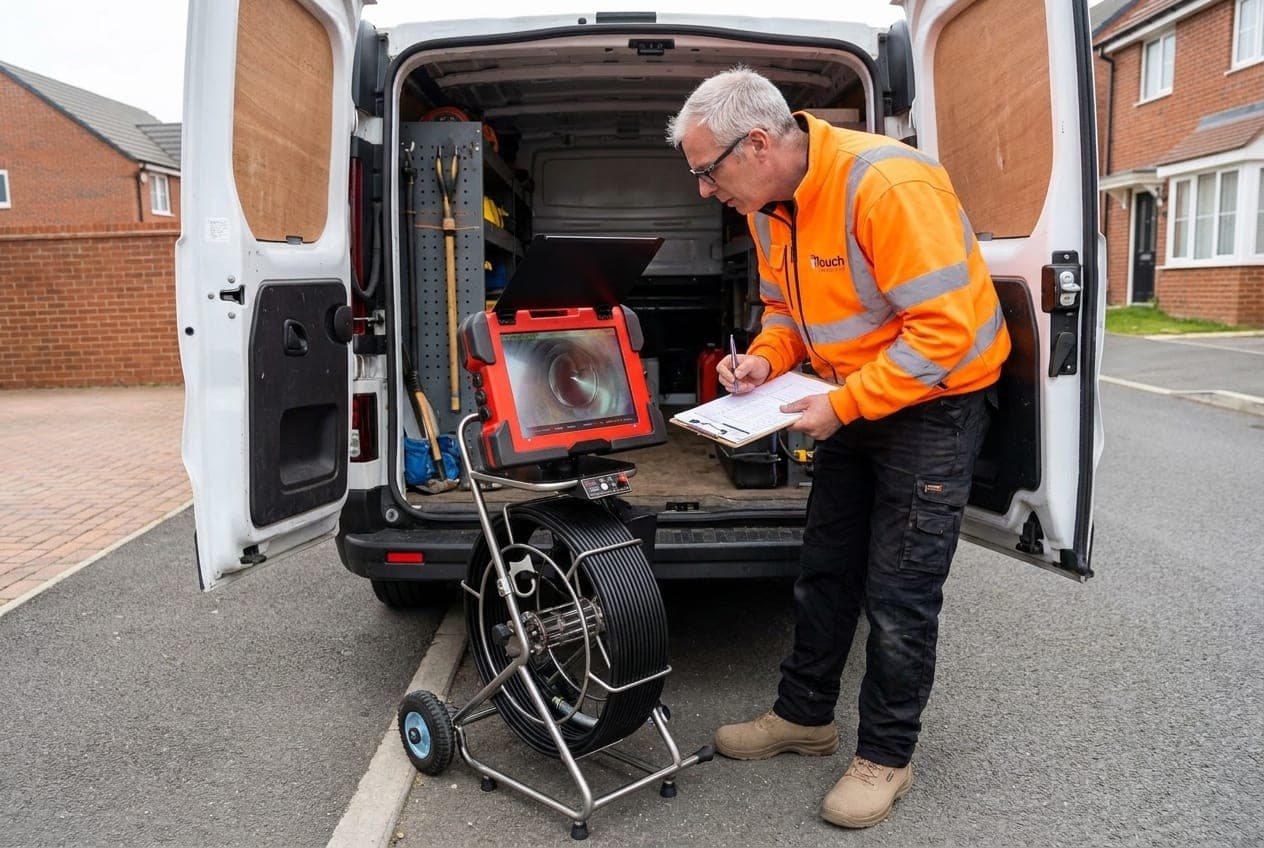
Drainage Surveys for Insurance Providers: What Evidence Do Insurers Actually Need?
Insurance claim delayed because drainage evidence is needed? Learn what a CCTV drainage survey should include for insurers, loss adjusters and property claims.
When a drainage problem becomes part of an insurance claim, a verbal opinion is rarely enough. Insurers, loss adjusters and claims handlers usually need clear evidence showing what has happened, where the defect is, and whether the damage is connected to the drain.
That is where a professional CCTV drainage survey becomes important.
A proper survey gives insurers the information they need to assess the claim. It can support claims involving sewage backup, flooding, subsidence, damp, collapsed drains, root damage, accidental damage and suspected leaking pipework.
This guide explains what insurance providers usually need, what a good report should include, and why the quality of the investigation matters.
Why insurers ask for a drainage survey
Insurance providers need evidence. If a homeowner reports sewage flooding, subsidence, damp or underground pipe damage, the insurer has to establish the likely cause before agreeing what is covered.
A drainage survey helps answer key questions:
- Is there a defect in the drainage system?
- Where exactly is the defect located?
- Is the affected pipe private, shared or public?
- Is the damage consistent with the claim?
- Is the issue sudden, accidental, gradual or maintenance-related?
- What repair work is required?
- Is further investigation needed?
Without this information, a claim can stall. The insurer may ask for more detail, the loss adjuster may query the cause, or the homeowner may be left going back and forth between contractors.
What types of claims involve drainage surveys?
Drainage surveys are commonly requested for claims involving:
- Sewage flooding inside the property
- External drain flooding
- Subsidence or ground movement
- Collapsed drains
- Root ingress
- Broken or displaced pipework
- Damp and water ingress
- Accidental drain damage during building work
- Escape of water from underground pipework
- Repeated blockages where a structural defect is suspected
The survey does not decide the claim — that is the insurer's job. The survey provides the drainage evidence needed to make a decision.
What should an insurance drainage survey include?
For insurance purposes, the report needs to be clear, structured and useful to people who may not be drainage engineers.
A good insurance drainage survey should include:
- CCTV footage of the inspected drain runs
- Still images of key defects
- A written summary of the findings
- Defect locations and distances from the access point
- Pipe material, diameter and direction where visible
- A drainage layout or map where required
- Clear recommendations for repair or further investigation
- Notes on any inaccessible sections
- Confirmation of whether the issue appears structural or blockage-related
If the report is vague, blurry or missing key information, the insurer may reject it or ask for another survey. That costs time and delays the claim.
Why footage quality matters
Drainage claims often hinge on small details. A fracture, displaced joint, root entry point or collapsed section may only be visible for a short distance within the pipe.
Poor footage creates uncertainty. If the image is dark, shaky, overexposed or not properly recorded, it can be hard to prove what the defect is — and that gives insurers less confidence in the evidence.
A professional CCTV survey should provide footage that clearly shows the drain condition. The written report should then explain the finding in plain English, not just technical codes.
Drainage surveys for subsidence claims
Subsidence claims often need drainage evidence because leaking or damaged drains can contribute to ground movement. If water escapes from underground pipework, it can wash away or soften surrounding soil, which over time may affect the stability of nearby ground and foundations. Our guide on leaking drains and subsidence in Yorkshire covers this in more detail.
For a subsidence-related claim, the survey may need to identify:
- Cracked or fractured pipes
- Displaced or open joints
- Collapsed sections
- Root ingress
- Areas where water may be escaping
- Drain runs close to affected walls or foundations
The report should also show where the drain sits in relation to the property, helping the insurer, structural engineer or loss adjuster understand whether the defect is relevant to the damage.
Drainage surveys for sewage flooding claims
If sewage has backed up into a property, speed matters. The insurer will want to know whether the blockage or defect is within the homeowner's private drain or in a shared/public sewer.
A CCTV survey can help establish:
- Whether the drain is blocked or structurally damaged
- Whether neighbouring properties may be affected
- Whether the issue appears to be upstream or downstream
- Whether the affected section is likely to be private or shared
- Whether urgent clearance or repair is needed
In some cases, the homeowner may need to contact Yorkshire Water if the problem appears to be in a shared or public sewer. In others, the issue sits within the private drainage system and must be dealt with directly.
Is the homeowner responsible, or Yorkshire Water?
Responsibility matters in insurance claims, because not every drainage problem is the homeowner's responsibility.
As a general rule, homeowners are responsible for private drains serving only their own property, up to the point where they connect with a public sewer or shared drain. Shared drains and public sewers are often the water company's responsibility, depending on the property and arrangement.
A survey can help establish where the issue sits, but responsibility can still need confirming with Yorkshire Water, building control, deeds or drainage records. Our guide on who is responsible for drains in Yorkshire explains this in full.
What if the survey finds no defect?
A clear survey is still useful. If no structural defect is found, the insurer can rule out certain causes and look elsewhere.
For example, the issue may be caused by:
- A temporary blockage that has already cleared
- A surface water problem
- Defective guttering or downpipes
- A plumbing issue inside the property
- Poor ground drainage
- A soakaway problem
- A public sewer issue outside the property boundary
A good report should say what was inspected, what was found, and whether any sections couldn't be reached — which helps avoid confusion later. For what typically follows a survey, see what happens after a CCTV drain survey.
How quickly can an insurance drainage survey be completed?
For active claims, delays are frustrating. Homeowners may be dealing with damage, smell, damp, flooding or a loss adjuster deadline.
Yorkshire Drain Survey provides CCTV drainage surveys across Yorkshire, with fast attendance available in many areas. The written report can usually be prepared quickly after the survey, depending on the complexity of the site and the detail required.
If your insurer has asked for specific information, tell us before the survey so the engineer knows what needs to be covered.
What should you ask your insurer before booking?
Before booking a drainage survey for a claim, ask your insurer or loss adjuster:
- Do you need CCTV footage as well as a written report?
- Do you need a drainage layout plan?
- Do you need defect coding or condition grading?
- Do you need photos of the affected area?
- Do you need a repair recommendation?
- Will the survey cost be considered as part of the claim?
- Is there a deadline for submitting evidence?
This helps avoid a second visit because a specific requirement was missed.
Frequently Asked Questions
Does a drainage survey guarantee my claim will be accepted?
No. The survey supplies the drainage evidence; the insurer decides the claim based on that evidence and your policy terms. A clear, well-documented report simply gives them what they need to assess it.
Can you prepare the report to a loss adjuster's requirements?
Yes. Tell us what your insurer or loss adjuster has asked for — footage, defect coding, a plan, repair recommendations — and we'll prepare the survey with that in mind to avoid a repeat visit.
Who pays for the drainage survey?
That depends on your policy. Some insurers treat the investigation as part of the claim. Ask your insurer before booking, and we'll provide a fixed quote upfront.
Book an insurance drainage survey in Yorkshire
If your insurer, loss adjuster or claims handler has asked for drainage evidence, Yorkshire Drain Survey can help. We provide CCTV drain surveys, drainage reports and drain mapping for homeowners, landlords and businesses across Yorkshire.
Call 0113 734 2245 for a quote, or fill in our contact form and we'll get back to you the same day.
Related guides
Why Regular Drain Surveys Are Essential for Yorkshire Homeowners
How regular CCTV drain surveys protect Yorkshire homeowners — what a survey involves, why it matters, and the common drainage issues it catches early.
Read guide →Drain Survey for Insurance Claim: What You Need to Know in Yorkshire
Need a drain survey for an insurance claim in Yorkshire? Learn what insurers require, what the report covers, and how to get expert CCTV evidence fast.
Read guide →Drain Mapping in Yorkshire: What It Is, When You Need It & What the Survey Shows
Need drain mapping in Yorkshire? Learn what a drainage map shows, when you need one for building work, extensions, homebuying or insurance, and how CCTV tracing works.
Read guide →Get in touch
Need a CCTV drain survey in Yorkshire?
Same-day available. Full written report. Transparent pricing. Call us or fill in the form.